This article may contain affiliate links. If you buy through them, Everyday Vitality Life may earn a small commission at no extra cost to you. Learn more.
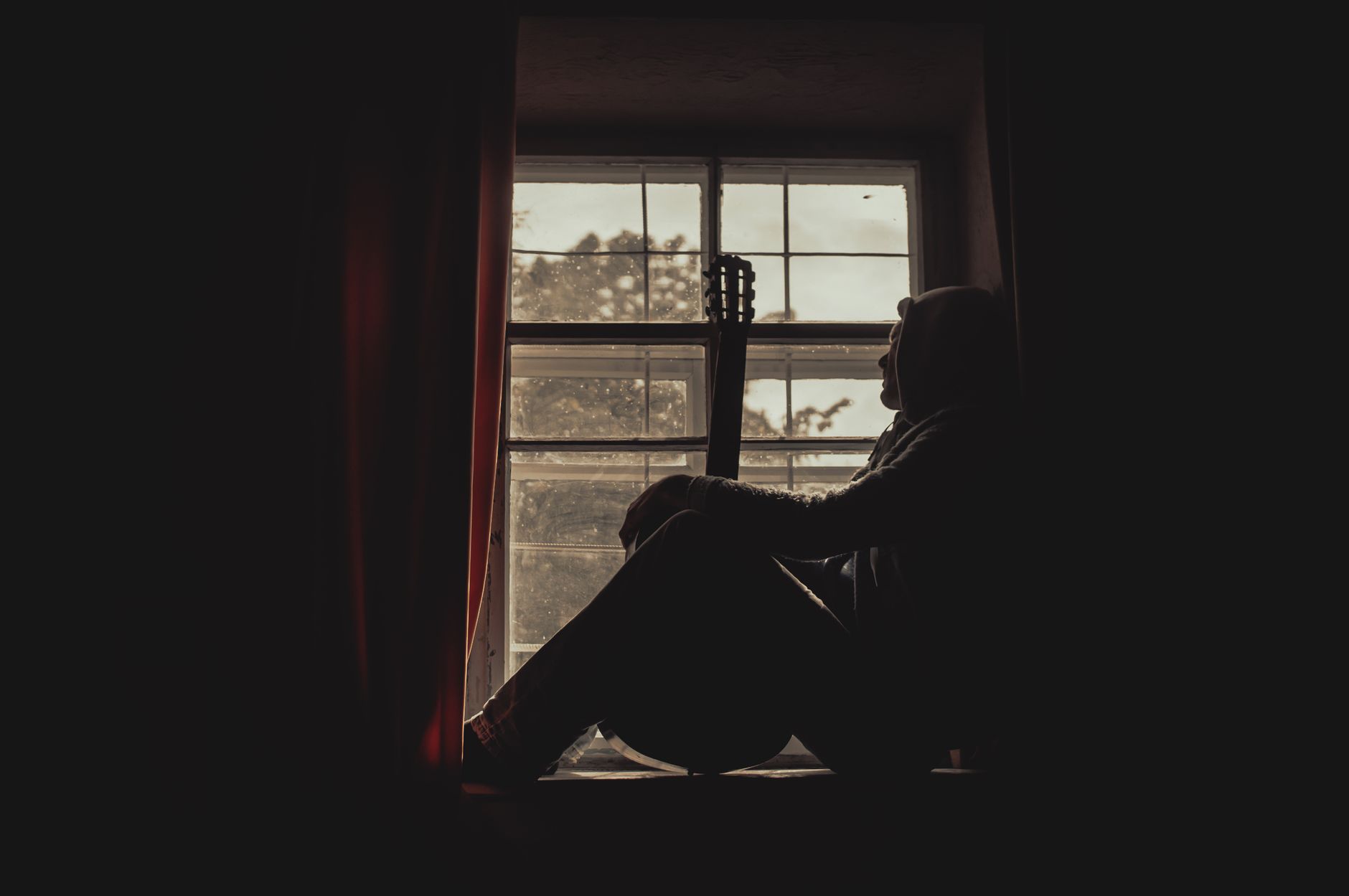
Some Sunday afternoons alone in my apartment feel spacious, my breathing slow and even, like the quiet is something I am floating in rather than something happening to me. Other Sunday afternoons, same apartment, same amount of silence, my chest feels tight in a way that has nothing to do with anything specific, just a low pressure that sits behind my sternum and does not have an obvious cause.
The circumstances on paper are identical. Nobody home, no plans, a quiet apartment. But my body clearly registers those two afternoons as different events, and it registers the difference before I have consciously decided which kind of afternoon this one is going to be.
The breath that spreads out versus the breath that stays small
On the good version of alone, my breathing spreads out. I notice it filling more of my ribs, side to side, not just front to back. There is room in it. I can sit on my couch with a book I am not really reading and just let my chest rise and fall without any particular hurry, and it does not occur to me to check the time.
On the other version, my breathing stays small even though nothing is constraining it physically. Same couch, same amount of air in the room, but each breath is shorter, more centered, like it is trying not to take up space even though there is no one there to take space from. I have caught myself breathing that way while scrolling through my phone, small tight breaths in an empty apartment, and had to actually stop and ask what exactly I thought I was making room for.
What the shoulders do differently
My shoulders are the clearest tell. Good alone, they sit low and a little back, the way they do after a long stretch. Lonely alone, they creep up toward my ears the same way they do in a stressful meeting, except there is no meeting, there is nobody in the room but me. That has always struck me as strange, that my body would brace defensively against an empty apartment, but it does, reliably, on the days when the alone time has tipped over into something else.
I have started using my shoulders as a kind of gauge before I even try to name what kind of afternoon I am having. If I catch them up near my ears while I am doing nothing in particular, sitting, reading, half watching something, I take that as information. Something has shifted from spacious to isolated, even if I cannot immediately say what caused the shift.
My chest seems to know the difference between alone and lonely well before I have found the word for either one.
The specific weight behind the sternum
On the harder afternoons, there is a particular pressure that sits right behind my breastbone, not painful, just present, like a hand resting flat there. It is not the same as the tight band I feel before a nervous phone call, which sits higher, closer to the collarbones. This one is lower and duller, and it does not go away when I take a deep breath the way tension sometimes does. It just sort of persists underneath the breathing, present through every inhale and exhale rather than easing with either one.
I have noticed this weight shows up more on days when I have not spoken out loud to anyone, not a call, not even a quick exchange with a cashier, nothing. It is not scientific, just a pattern I have watched repeat enough times to trust it a little. The silence of the apartment on those days seems to sit differently in my chest than the silence on days when I have had even a small amount of contact with another voice earlier on.
What changes the moment a text comes in
There is a small, immediate shift that happens when my phone buzzes with a message from someone I actually want to hear from, even before I read what it says. My breath catches slightly, then releases, and the weight behind my sternum eases by some small percentage, not gone, but lighter. That happens whether or not I even respond right away. Just the notification itself, the small proof that I am in someone’s mind, does something physical before any actual conversation occurs.
What is interesting is that a work email does not do this. Same phone, same buzz, same interruption of the silence, but no easing in my chest, sometimes the opposite, a slight tightening instead. So it is not contact itself that does it. It is something more specific about the kind of contact, something my chest apparently evaluates faster than I consciously do.
The afternoons that turn themselves around
Not every heavy alone afternoon stays heavy the whole time. I have had several where the weight behind my sternum was there for an hour or two and then, with no clear trigger I can point to, just lifted. My breathing spread back out, my shoulders dropped, and the apartment went from feeling isolated to feeling merely quiet again, same walls, same silence, different body entirely.
I used to think I needed to do something to make that shift happen, go outside, call someone, change the scenery. Sometimes those things help. But plenty of times the shift has happened while I was just sitting there doing nothing different at all, which makes me think the body sometimes just needs to run its own course through a feeling before it lets go of it, on a timeline that has very little to do with what I am actively trying to do about it.
Where this stops being something I can just notice
This is a record of ordinary solitude, the kind that shifts mood over the course of an afternoon for reasons that are not always clear and usually pass on their own. It is not a description of clinical loneliness or depression, which are heavier and more persistent than a Sunday that feels a little flat, and which deserve real support rather than a paragraph of noticing. If the weight behind the sternum does not lift, if alone time has stopped having a good version at all, or if isolation has turned into something constant, that is worth bringing to a doctor or a counselor, not something to just observe and wait out. What I am describing is the ordinary tide of a normal life, not a stand-in for actual care when something heavier is happening.
Trusting the earlier signal
I still cannot always tell, right when I sit down on a Sunday afternoon, which version of alone I am about to have. But I have gotten better at reading the early signs, the shoulders, the small breath, the weight behind the sternum, before my mind has caught up with a name for any of it. The body seems to always know first. I am just trying to get better at actually listening when it tells me.