This article may contain affiliate links. If you buy through them, Everyday Vitality Life may earn a small commission at no extra cost to you. Learn more.
There is a window most people never talk about because it lasts so briefly they forget it happened. It is the gap between not being asleep anymore and actually being awake. Your eyes might still be closed. Your limbs feel like they belong to someone else, heavy in a way that has nothing to do with tiredness and everything to do with the body not having remembered yet that it is supposed to move. I used to think of this as dead time, a few wasted seconds before the real morning started. Now I think it might be the most honest part of the day, because nothing has been decided yet and nothing has been performed.
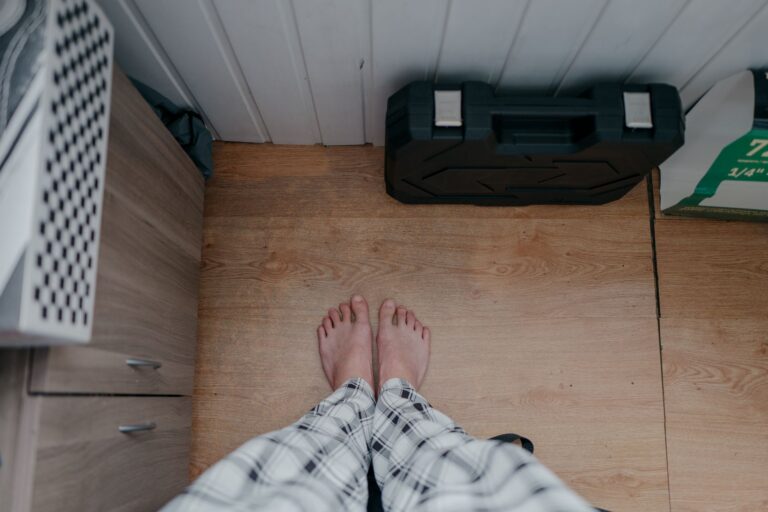
On an ordinary Tuesday last spring, I woke up before my alarm went off, in that particular gray light that comes through a blind when the sun is up but not yet high. My apartment was cold, the kind of cold where you can feel the difference between the air above the blanket and the warmth trapped underneath it. I lay there for maybe forty seconds doing nothing, and in that time my whole body ran some kind of internal check. Shoulders first, then the low back, then a dull throb behind one eye that would either turn into a headache or fade depending on what I did next. This is the part of waking up that has nothing to do with willpower. It is just information arriving.
The body reports before the mind interprets
What I have noticed, paying attention to this window over many mornings, is that the body seems to file its report before the mind has caught up enough to argue with it. There is a rawness to it. If my jaw is tight, I feel the tightness before I have any thought about why. If my chest feels open and easy, that arrives first too, uncomplicated by any story about what kind of day I am going to have. The interpretation comes a beat later, once the thinking parts of the brain switch back on and start assigning meaning to sensations that were, a moment earlier, just sensations.
I think this matters because so much of how we talk about mornings skips straight to the interpretation. We talk about mood, about motivation, about whether we are a morning person or not, and we skip the part where the body is simply reporting its condition, the way a car dashboard lights up before you have even turned the key. Stiffness in a hip is not pessimism. A dry mouth is not a character flaw. These are just facts the body is handing over, and the ten seconds after waking are when they arrive most clearly, before anything else gets layered on top.
What the light is doing while you are still deciding
The quality of light in the room changes what this window feels like, and I do not think this gets enough credit. On mornings when the blinds are open even a crack, there is a pale wash across the ceiling that seems to nudge the eyes open on their own, gently, without the jolt of an alarm. On mornings when the room is fully dark, waking up feels more like surfacing from somewhere deep, a little disoriented, unsure for a second or two which way is up. I have started leaving one blind slightly open on purpose, not for any technique, just because I noticed the difference in how those ten seconds felt.
There is also the temperature of the air on skin that is not yet covered by a blanket, the first contact with a morning that has its own weather regardless of what the day will bring later. A cool room in early fall has a bite to it that wakes the skin up almost before the eyes open. A stuffy room in midsummer does something closer to smothering, and I notice I surface more slowly on those mornings, as if the air itself is asking me to stay under a little longer.
The gap between waking and rising
Some mornings the gap is a breath. Some mornings it stretches long enough that I catch myself wondering if I fell back asleep.
There is a second gap that follows the first one, the space between being awake and actually getting up. This is where the negotiating happens, though negotiating is too active a word for what is really just the body weighing its options. Legs test their own weight before committing. There is a moment where turning onto one side to push up off the mattress requires more coordination than it should for something so simple. I have caught myself, more than once, lying still and simply noticing how unwilling the body is to leave the specific warmth it has built up overnight, a warmth that took hours to make and that standing up destroys in about two seconds.
What surprised me, once I started paying attention to this instead of rushing through it, is how much information is available if you just wait a beat instead of throwing the blanket off immediately. A tight lower back on a particular morning was not a coincidence. It followed a day of sitting hunched over a desk with almost no breaks. A morning where I woke up feeling unusually light followed a night where I had gone to bed early enough that my body had gotten what it needed before the alarm interrupted anything. None of this required tracking or measuring. It just required not skipping past the ten seconds to get to the coffee.
Why rushing past it costs something
On the mornings when I am running late and the alarm sends me straight from asleep to sitting upright and moving, something gets lost. I do not always notice what, exactly, until later in the day, when a low hum of tension shows up in my shoulders that I cannot quite trace to any single cause. I suspect it traces back to skipping that window entirely, to the body not getting the chance to hand over its report before being put straight to work.
This is not an argument for lying in bed longer than you have time for, and it is not a productivity trick dressed up as mindfulness. It is closer to noticing that a report gets delivered whether or not anyone reads it, and reading it costs almost nothing. Ten seconds, maybe fifteen on a slow morning. Long enough to notice the temperature of the room, the state of the jaw, the particular quality of tired or not tired that the body is carrying that day, before the mind steps in and starts telling you what it all means.