This article may contain affiliate links. If you buy through them, Everyday Vitality Life may earn a small commission at no extra cost to you. Learn more.
My grandmother used to say she could tell how someone’s day had gone by watching their hands at the dinner table, before they said a word about it. I thought it was one of those things older women say that sounds wise but does not really mean anything specific. Then I started paying attention to my own hands, and I understood exactly what she meant.
Hands are honest in a way faces are not, mostly because we do not think to manage them. We compose our expressions without noticing, soften our voices, sit up a little straighter when someone walks into the room. But hands mostly do what they are actually doing. And it turns out the different kinds of tired each have a distinct hand signature, if you know to look.
Sleepy hands fumble
When I am sleepy, my hands get clumsy in a specific way. Keys take two or three tries to find the lock. A glass gets set down slightly off the edge of the counter. Buttons on a shirt suddenly seem to require more coordination than they used to. There is a small lag, like the signal between brain and fingers has picked up some static.
This is the hand version of heavy eyelids, really. The whole nervous system is winding down toward sleep, and fine motor control is one of the first things to go soft around the edges. I have dropped more phones in the last hour before bed than at any other point in the day, and it is not clumsiness in the general sense. It is a very specific, late night kind of clumsiness that vanishes completely by morning.
The tell here is that it is not paired with any ache. The hands are not sore or heavy, just imprecise. That imprecision is asking for exactly one thing, which is sleep, and usually not very much longer of a wait for it either.
Worn out hands go heavy and stiff
After a day of real physical use, whether that is scrubbing a kitchen top to bottom, gardening, or carrying grocery bags up three flights of stairs, my hands feel entirely different. Not clumsy, just heavy. The fingers do not want to curl all the way into a fist. There is a stiffness across the knuckles, and if I have been gripping something for a long stretch, like a steering wheel or a mop handle, there is a faint ache in the meat of the palm when I finally let go.
I notice this most clearly in the small pause before picking something up. A normal reach for a coffee cup happens without any thought at all. A worn out reach has the tiniest hesitation in it, almost like the hand is checking in with itself first, gauging whether this is going to take effort.
Worn out hands want warmth and stillness, not sleep. A hot shower with the water running over the knuckles for an extra minute does more for this kind of tired than lying down does.
I have taken to running warm water over my hands at the sink some evenings for no reason other than that it helps, the way you might rub a sore shoulder without really deciding to. The stiffness eases, the fingers curl more easily, and there is a specific relief in it that a nap would not deliver, because the problem was never sleepiness in the first place.
Drained hands go still
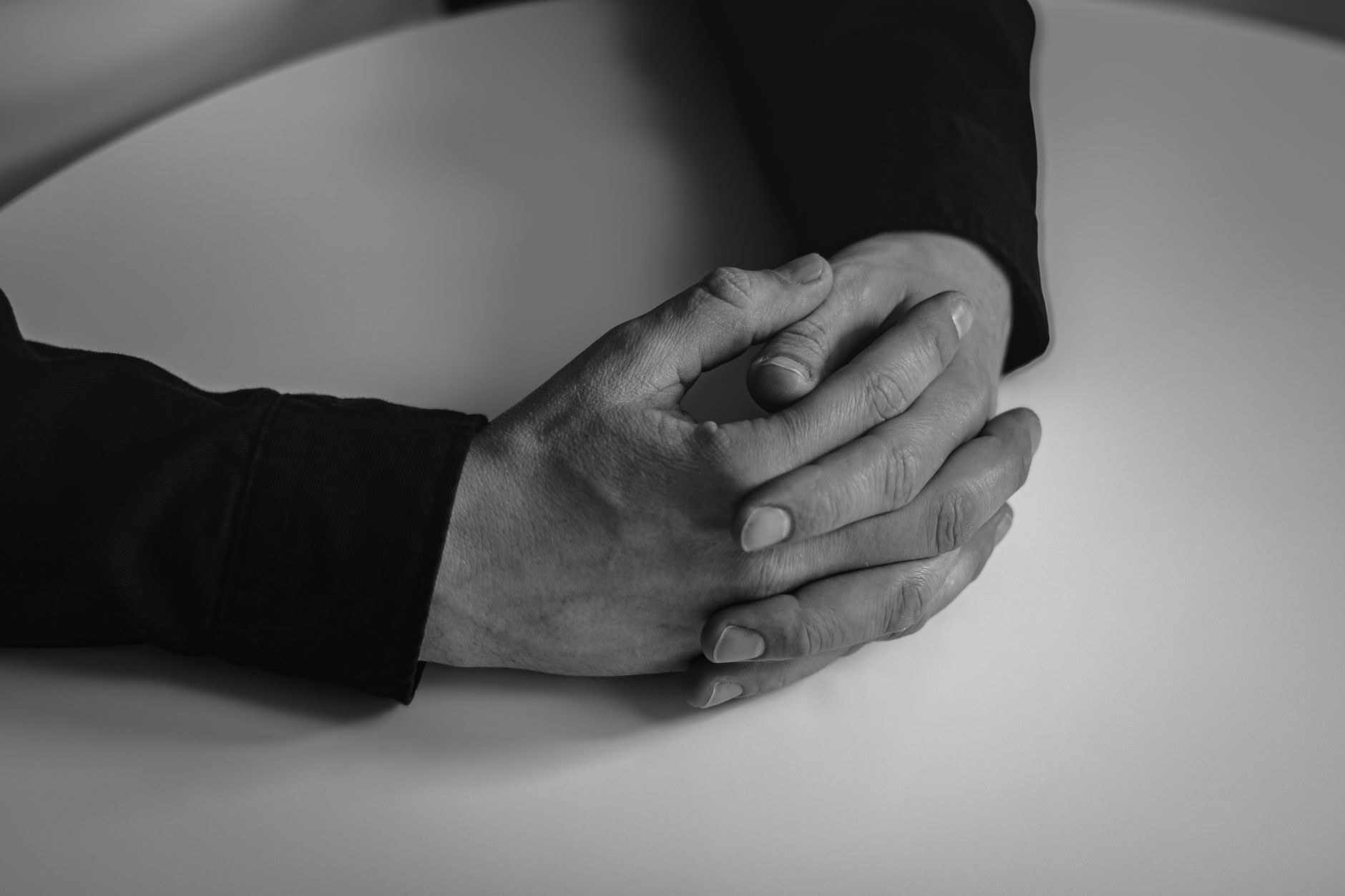
This is the one that took me longest to notice, because it is defined by absence rather than by any particular movement. On an emotionally flat, wrung out day, my hands stop doing the small unconscious things they normally do. No fidgeting with a pen. No absent tapping on the table during a phone call. No reaching for my phone every few minutes out of habit. They just rest, often in my lap or folded on the counter, not gripping anything, not reaching for anything.
It is a stillness that looks like calm from across the room but does not feel like calm from the inside. It feels more like the hands have simply run out of the small impulses that usually animate them. I sat at my kitchen table one evening after a difficult phone call and realized I had been looking at my own still hands for several minutes without any thought of picking up my tea, even though it was right there and I wanted it.
This kind of tired does not want warmth in the hands specifically, and it does not want sleep either, at least not right away. What it wants is for nothing to be required of the hands for a little while. No typing, no scrolling, no small tasks handed over. Just letting them sit still without asking anything of them seems to be the only thing that actually helps, along with quiet more generally.
Reading your own hands before you decide what you need
What I like about paying attention to hands specifically is that they are hard to fake and easy to check. You do not have to sit and think hard about how you are feeling, which can be its own kind of effort on a tired day. You just glance down. Are the fingers fumbling. Are the knuckles heavy and stiff. Are the hands unusually, uncharacteristically still.
Each answer points somewhere different. Fumbling points toward bed. Stiffness points toward warmth and a slower pace with whatever is left of the evening. Stillness points toward quiet and being asked for nothing, at least for a stretch of time.
I think the reason this works as well as it does is that hands are so constantly in use that any change in how they behave is a genuine data point, not something manufactured by overthinking. A tired mind can talk itself into all kinds of stories about how it is doing. Hands mostly just do what the body actually needs them to do, or stop doing what they would normally do, and that is easier to trust.
None of this replaces paying attention to how you actually feel more broadly, and if a flat, still, wrung out feeling in the hands and everywhere else does not lift after rest and stretches on for weeks, that is a conversation for a doctor rather than something to sort out through hand watching alone.