This article may contain affiliate links. If you buy through them, Everyday Vitality Life may earn a small commission at no extra cost to you. Learn more.
I used to think naps were a coin flip. Some days I would lie down for twenty minutes and get up ready to finish the whole afternoon. Other days I would lie down for what felt like the same twenty minutes and wake up an hour and a half later with my face creased from the couch cushion, my mouth dry, and a fog sitting behind my eyes that did not lift until I had eaten something and stood under a hot shower. For years I called this bad luck. It is not luck. It is timing, and once I paid attention to it, the coin flip stopped.
The nap that works is short. Not short because someone told me to keep it short, but short because of what actually happens in my body when I let it run long. Somewhere between the twenty and thirty minute mark, I drop into a heavier kind of sleep. If I wake up inside that heavier stage, my body has already started shutting things down that it now has to restart. My hands feel cold. My thinking is slow, like wading through water. That is the grogginess people talk about, and it is not a mood, it is a physical state that takes real minutes to climb out of.
The short nap never gets that far. I set a timer for twenty-two minutes, not twenty, because I need those first two minutes just to let my shoulders drop and my jaw unclench. Most days I do not fully sleep. I get somewhere closer to a heavy daydream, eyes closed, thoughts loosening from their usual order, sound going soft at the edges. When the timer goes, I am annoyed for about four seconds and then genuinely awake. Not caffeinated-awake. Steadier than that. My eyes focus faster on the next thing I look at.
What the room has to be like
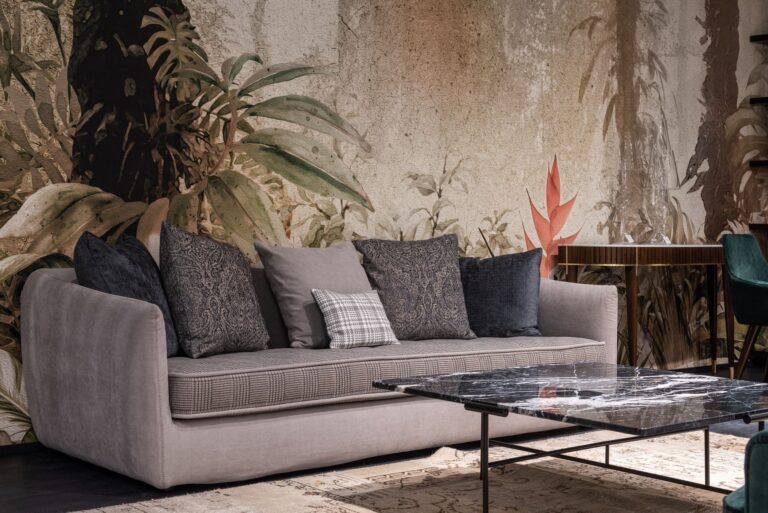
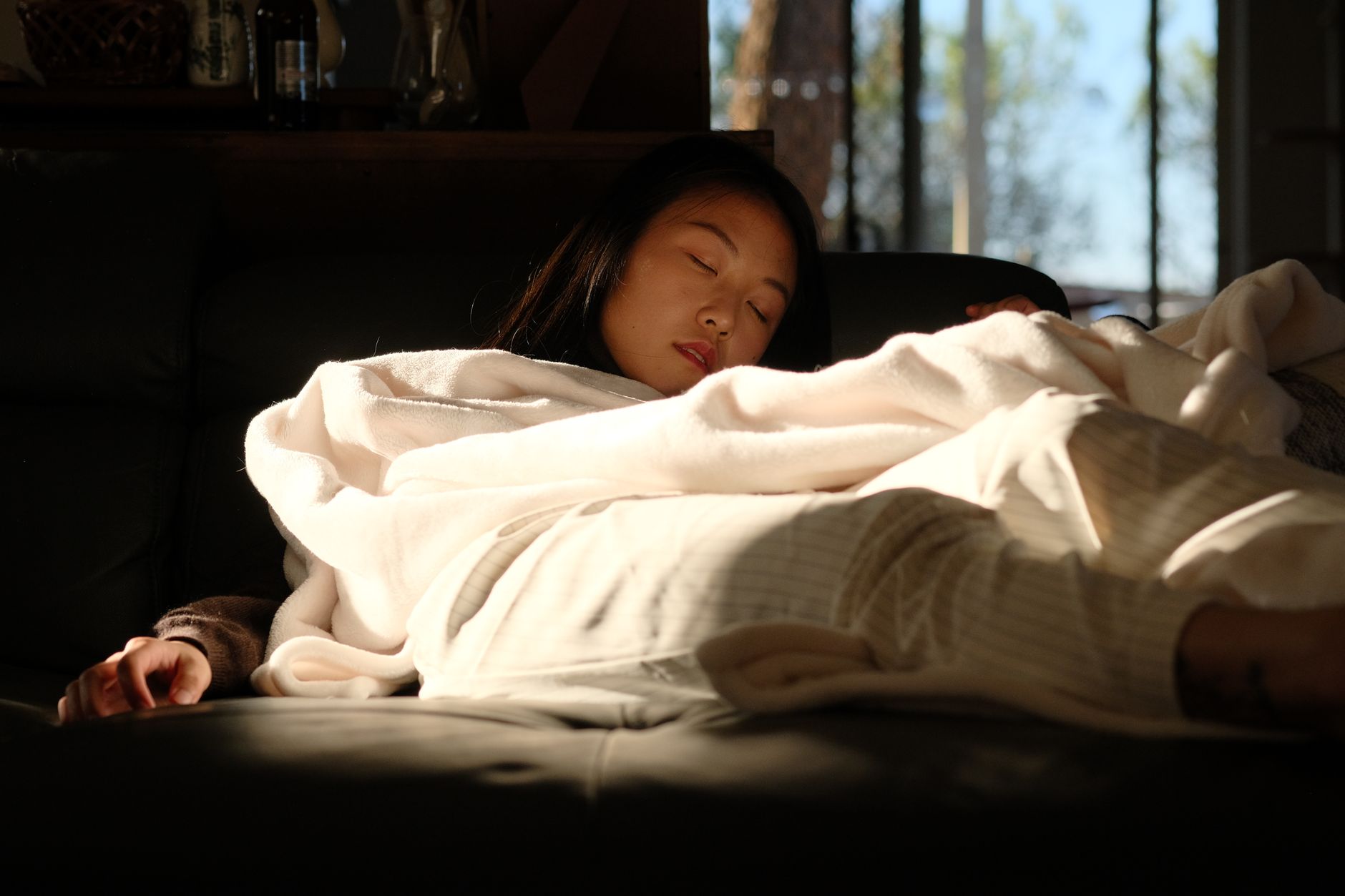
I learned the hard way that where I nap matters as much as how long. On the couch, in daylight, with the television murmuring in the next room, I do not sleep deep enough to hit that heavy stage even if I stay there forty minutes. That is actually fine for a nap, but it means the nap does less. It is more like sitting with my eyes closed than resting.
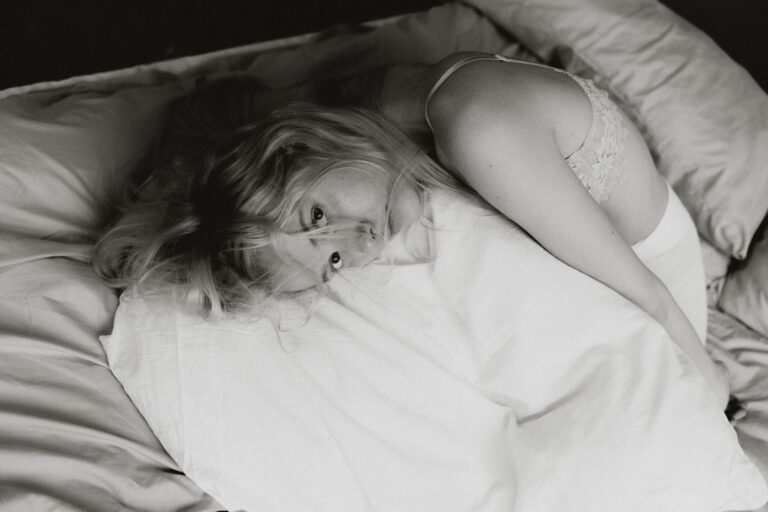
In my bedroom, curtains pulled, door shut, it is a different animal. The dark tells my body something different than the couch does. I go under faster and deeper, which is exactly why I have to be stricter about the timer in there. A nap in a dark, quiet room past the twenty five minute mark is basically gambling with the rest of my day.
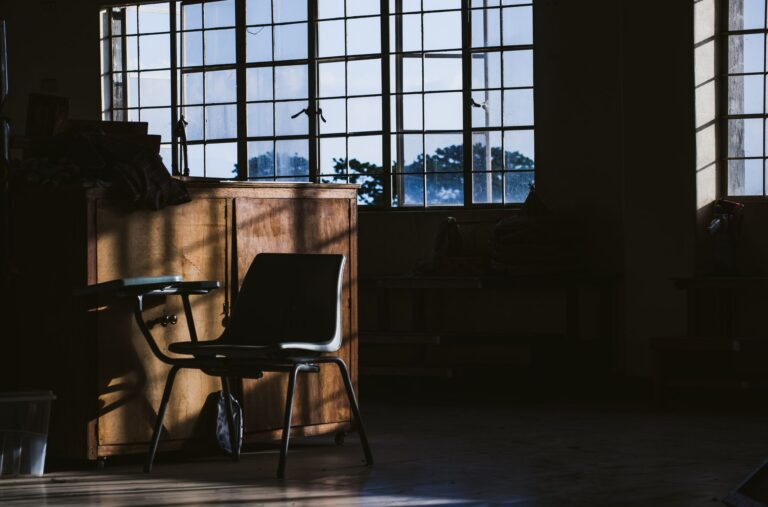
There is a middle ground I like best now: a chair with my feet up, blinds half closed so the room is dim but not black, a light blanket over my legs because my body temperature drops a little as I relax and I get cold fast. That in-between dimness seems to let me rest without pulling me all the way under. I wake up from that chair feeling like I stepped out of the day for a minute, not like I fell into a hole.
The time of day changes everything
Early afternoon, somewhere around one to three, a short nap gives something back. Later than that, closer to five or six, the same twenty minutes can eat into the tiredness that is supposed to carry me into bed at a normal hour. I have tested this against myself more times than I want to admit. A nap at two means I am in bed by ten thirty without much fuss. A nap at five thirty means I am staring at the ceiling at eleven forty, wide awake, annoyed at my own choices from hours earlier.
My body seems to want the nap timed to when its energy was already dipping on its own, not as a rescue after I have pushed through hours of low energy on caffeine and stubbornness. Wait until I am truly depleted, running on fumes and a third cup of coffee, and the nap that follows tends to be the long, hard-to-wake-from kind.
The nap is not a reward for exhaustion. It works best as a small correction, taken before things get bad, not as an emergency measure after they already have.
What does not count as resting
Lying on the couch scrolling my phone for twenty minutes is not a nap and it does not do what a nap does. My eyes stay busy, my thumb keeps moving, and there is a small current of attention running the whole time even if my body looks still from across the room. I get up from that feeling like I only sat still, not like I rested. The tiredness is exactly where I left it.
Watching something on the television with my eyes half open is closer to rest but still not the same. There is a kind of resting that requires actually closing my eyes and letting the room go dark behind my eyelids, even if I never fully sleep. The visual noise, even soft and familiar, keeps something in my head lightly working.
I have also learned that a nap taken out of guilt, the kind where I am lying there thinking about everything I should be doing instead, barely helps at all. My legs feel restless. My mind keeps circling back to the task list, and I get up exactly as tired as I started.
How I know it worked
The tell is in the first two minutes after I open my eyes. If my thinking feels clearer almost immediately, if colors in the room look a touch more vivid, if I can pick up a task and get moving without needing coffee or a cold splash of water on my face first, the nap did its job. If instead I feel like I am dragging myself up through something thick, if I need to sit on the edge of the bed for a minute before I trust my legs, the nap ran too long or hit too deep a stage.
These days I do not aim for the perfect nap every time. I aim for the short one, in a dim but not pitch dark room, sometime before mid-afternoon, with the phone in another room entirely. That combination gets it right often enough that I stopped thinking of rest as something unpredictable. It is closer to a recipe now than a gamble.
None of this replaces a full night of real sleep, and if tiredness during the day is a daily fight no matter how you rest, that is worth talking through with a doctor rather than solving with a better nap technique. But for the ordinary afternoon slump, the kind that shows up whether or not anything is actually wrong, I have stopped fighting it with willpower and started meeting it with twenty two minutes in a chair with my feet up.