This article may contain affiliate links. If you buy through them, Everyday Vitality Life may earn a small commission at no extra cost to you. Learn more.
I used to say I was tired the way other people say hello. It covered everything. The heaviness behind my eyes at ten at night, the ache in my legs after a long day on my feet, the flat, gray feeling that showed up after a hard phone call with my sister. One word, three completely different bodies wearing it.
It took me a long time to notice that these were not the same thing at all, and that treating them as one thing was why nothing I tried seemed to help for long. You cannot fix a feeling you have not actually identified. So I started paying attention, the way you might pay attention to weather, and I found there were at least three distinct kinds of tired that kept showing up in my days, each with its own texture and its own request.
Sleepy has a weight to it
Sleepy tired is the easiest to recognize once you know what to look for, because it lives mostly in the face. The eyelids get heavy first, then the jaw goes slack, and there is a pulling sensation behind the eyes like something is gently tugging them shut. Yawning shows up uninvited. The room can be interesting, the conversation can be good, and still the body starts angling itself toward horizontal.
Sleepy tired does not care about circumstances. It arrives on a schedule, roughly the same hour most nights, whether or not the day has been hard. It is biological in a way that feels almost polite, like a body simply keeping its own appointment. The only thing that actually answers it is sleep. Not rest, not a snack, not a change of scenery. Sleep, or at least lying down with the lights off and letting the eyes close.
I learned this the hard way for years, pushing through the eleven o’clock heaviness with another cup of tea or a scroll through my phone, and finding that the tea did nothing except keep me awake to feel worse. Sleepy tired does not respond to being talked out of itself.
Worn out lives in the muscles
Then there is the tired that comes after physical use. This one sits lower in the body, in the legs and the shoulders and the low back, and it has a dull, used quality rather than a sleepy one. Your eyes might be perfectly alert. You could read a book or hold a conversation with no trouble at all. But your legs feel like they are made of something heavier than usual, and sitting down comes with an audible exhale.
I get this after a day of errands that involved a lot of walking, or after moving furniture, or after standing at the stove cooking something that took three pots and constant attention. The muscles have simply spent what they had. What answers this kind of tired is not sleep, at least not right away. It is getting off my feet, a warm shower that loosens the shoulders, maybe stretching out on the couch with a pillow under my knees. The body wants to be horizontal or supported, but it does not necessarily want to close its eyes yet.
I used to confuse this for sleepy tired and go to bed two hours early, only to lie there wide awake with tired legs and an active mind. The mismatch is the tell. If you put your body down and your brain keeps running, you probably had the muscle kind, not the sleep kind.
Drained does not live in the body at all
The third kind is the hardest to name because it does not show up as heaviness anywhere specific. It shows up as a kind of flatness. Colors seem a little less bright. Food seems less interesting. Small requests, the kind that would normally take no effort, start to feel like a lot to ask. This is the tired that follows a hard conversation, a stretch of worry, a day of staying patient about six things in a row.
The strange part about this kind of tired is that it can show up even after a full night of sleep and a day with almost no physical activity at all. It has nothing to do with the body’s fuel tank and everything to do with what the day asked of you emotionally.
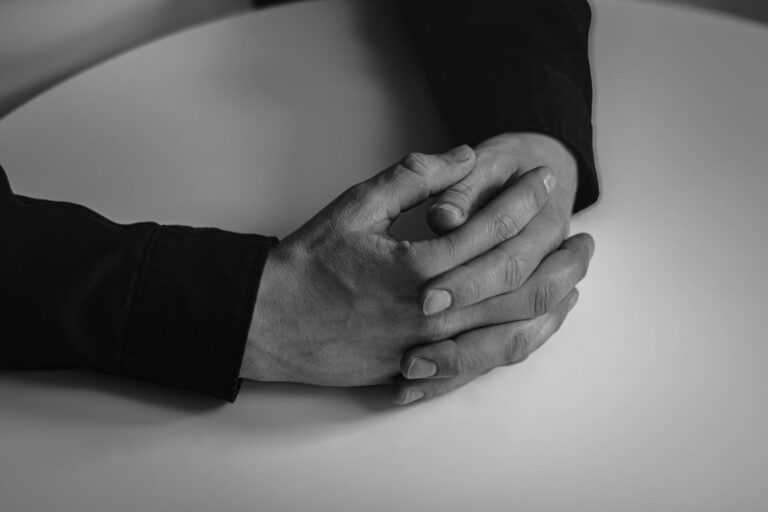
I notice it most in my hands, oddly. They go still. I stop fidgeting with things, stop reaching for my phone, stop doing the small busy motions that usually fill a quiet moment. There is just a kind of stillness that is not peaceful, more like a battery indicator sitting at empty.
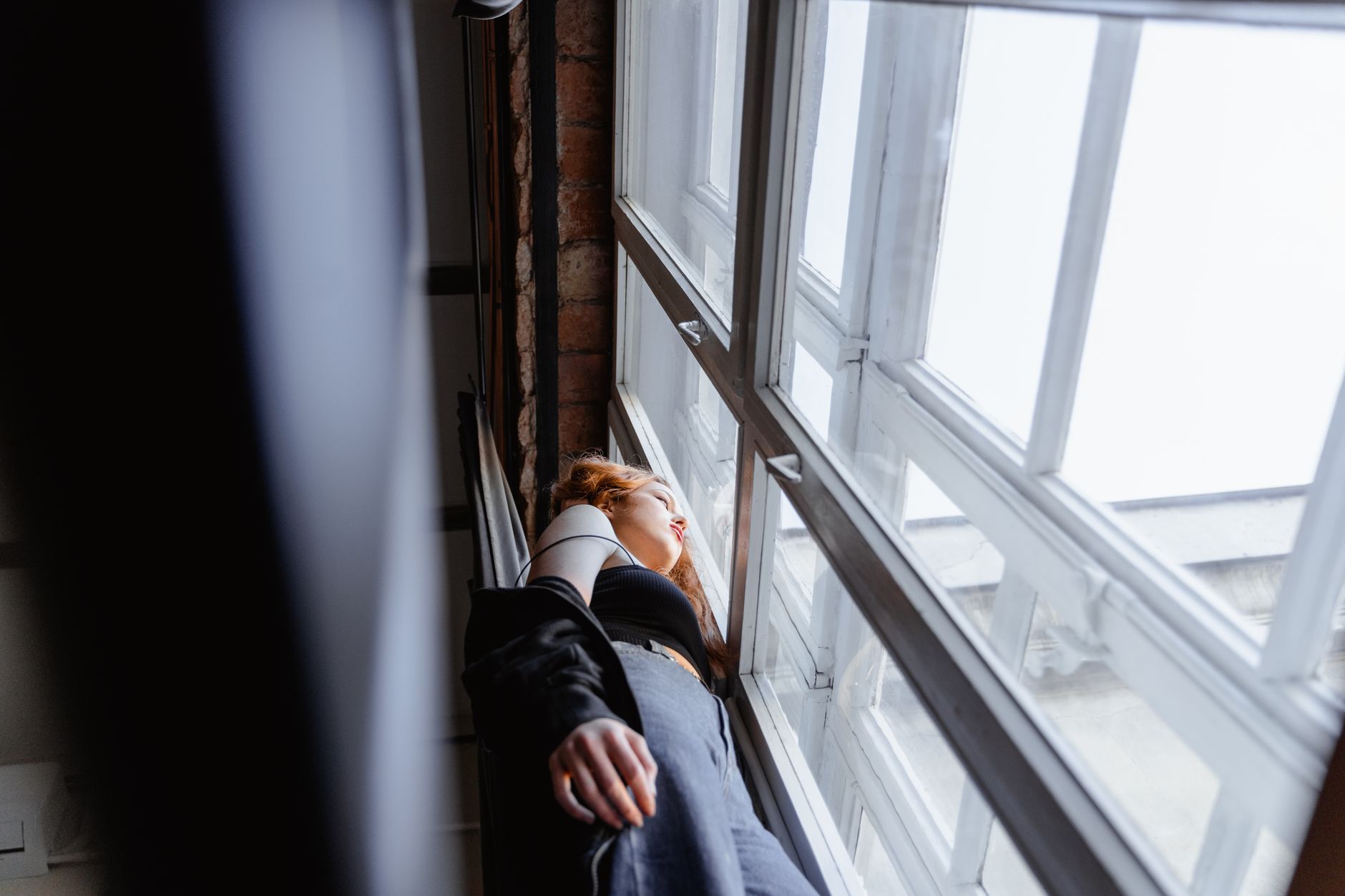
What answers this kind of tired is not sleep and it is not rest for the muscles. It is quiet, and often it is being left alone for a while. Not a nap, not a walk, just some space where nothing is being asked of me. A closed door. A window with nothing happening on the other side of it. Sometimes it is talking to one specific person, and sometimes it is talking to no one at all.
Why the mix-up costs you
The reason this distinction matters is that each kind of tired has its own answer, and the wrong answer barely touches the actual problem. Coffee does nothing for sleepy tired except delay it. A nap does not fully answer worn out muscles, though it might help a little. And pushing through drained tired with willpower, showing up cheerful and engaged when your hands have gone still, tends to leave you feeling worse the next day, like you spent money you did not have.
I think this is part of why so many ordinary days end with a feeling of having failed at rest even after eight hours of sleep. The sleep answered one kind of tired and left the other two untouched. You woke up rested in the eyes and still worn out in the shoulders, still flat behind the ribs.
Learning to ask which one
These days when I catch myself reaching for the word tired, I pause for one extra second and ask where it is actually sitting. Behind my eyes. In my legs and shoulders. In that flat, quiet place that has nothing to do with muscles or sleep at all. The answer usually comes fast once I actually ask, because the body already knows. It was just waiting for me to check in instead of reaching for the same blanket word every time.
Some evenings it is more than one at once, which is its own useful information. A day that wore out my legs and my patience needs both a warm bath and some quiet afterward, not just one or the other. Splitting the tired into its parts makes the rest that follows land where it is actually needed, instead of missing twice and hitting once.
If any of this sounds like it goes beyond ordinary daily tiredness, especially if the flat, drained feeling sticks around for weeks rather than lifting after some quiet time, that is worth bringing to a doctor rather than trying to sort out on your own.