This article may contain affiliate links. If you buy through them, Everyday Vitality Life may earn a small commission at no extra cost to you. Learn more.
My brain is the last one to find out. By the time I consciously register that I have slid into the afternoon lull, my hands have already been broadcasting it for a good ten minutes. They are the early warning system I never asked for but have learned to trust more than my own sense of how alert I feel.
The first thing that happens is small mistakes. I will reach for my coffee cup and misjudge the distance by half an inch, knuckles grazing the rim instead of the handle. I will type a word with the letters in the wrong order, something my hands almost never do in the morning. It is not weakness exactly. My grip is fine if I test it. It is more like the wiring between my hands and my intentions has gotten a little loose, a little delayed, like a phone call with a half-second lag.
The clumsy stage
This stage is almost funny in hindsight. I drop the cap of a pen and do not notice for a full minute. I go to push my chair in and misjudge how far it needs to travel. None of it is dangerous or even inconvenient really, but it is consistent enough that I have started using it as a kind of internal clock. When I fumble the same pen twice in five minutes, I know without checking a watch that it is somewhere in the early afternoon.
There is a specific feeling in my fingertips during this stage, a bit like they have been slightly numbed, the way lips feel after a dentist’s local anesthetic starts wearing off. Not numb enough to lose sensation, just numb enough to lose precision.
Then the weight comes
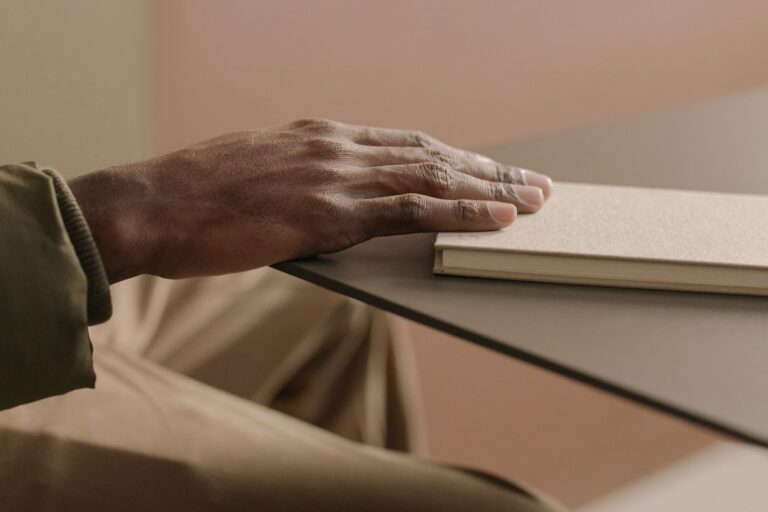
After the clumsiness, my hands get heavy. This is the stage most people would recognize as tiredness, but it is oddly localized. My arms do not feel heavy in the shoulders. It is specifically from the wrist down, like my hands have quietly filled with something denser than the rest of me. I catch myself letting them rest flat on the desk between tasks, palms down, fingers loose, in a position I never choose on purpose in the morning.
My hands go still before the rest of me admits it is time to slow down.
If I am holding a mug during this stage, I notice I grip it with my whole palm instead of my fingers, cradling it like the warmth matters more than the drink. I do this without deciding to. It is only in writing this down that I realized how consistent the gesture is.
Small things I have noticed in this stage
- My handwriting gets rounder and less precise, letters losing their sharp corners
- I start resting my chin in one hand, elbow on the desk, in a pose I associate with being a bored student
- My fingers drum slower on surfaces than they do in the morning, almost half the speed
- I fold my hands together more, tucking them against my body instead of leaving them loose at my sides
The stillness that follows
The last stage is stillness. My hands stop reaching for things unless there is a real reason. I will sit through a stretch of minutes with them simply resting, not fidgeting, not typing, not doing the small unconscious tasks hands usually find for themselves, like straightening a stack of papers or turning a pen over. This is usually the deepest point of the dip, and it does not last as long as the other two stages. Ten minutes, maybe fifteen.
What eventually breaks the stillness is almost always something outside of me. A phone buzzing. Someone asking a question. The specific decision to stand up and get water. Left entirely to their own devices, my hands seem content to stay still much longer than the rest of my afternoon actually allows for.
Why I pay attention to any of this
I started noticing my hands specifically because they are honest in a way my mood is not. I can tell myself I am fine, that the afternoon slump is nothing, and push through on willpower alone for a while. My hands do not perform that kind of denial. They get clumsy, then heavy, then still, on their own schedule, regardless of what I am telling myself about how productive I plan to be for the rest of the day.
Once I stopped fighting the sequence and started simply watching it, the afternoon got a little less frustrating. I know now that the clumsy stage is my cue to switch to lower stakes tasks, the kind where a typo does not matter much. I know the heavy stage is a good moment to physically shift position, to unfold my hands from wherever they have tucked themselves and shake them out a little. And I know the stillness will not last.
None of this is a fix, and I am not claiming there is a trick hidden in how I hold a coffee mug. It is just a pattern I noticed by paying closer attention to a part of my body that usually goes unexamined. If your own afternoon has a physical signature like this, it might be worth watching for it rather than only tracking how your mind feels. The body tends to announce the dip before the mind agrees to admit it. And if any of this feeling is severe, sudden, or paired with other symptoms that worry you, that belongs in front of a doctor rather than in the pages of a blog about the texture of an ordinary afternoon.